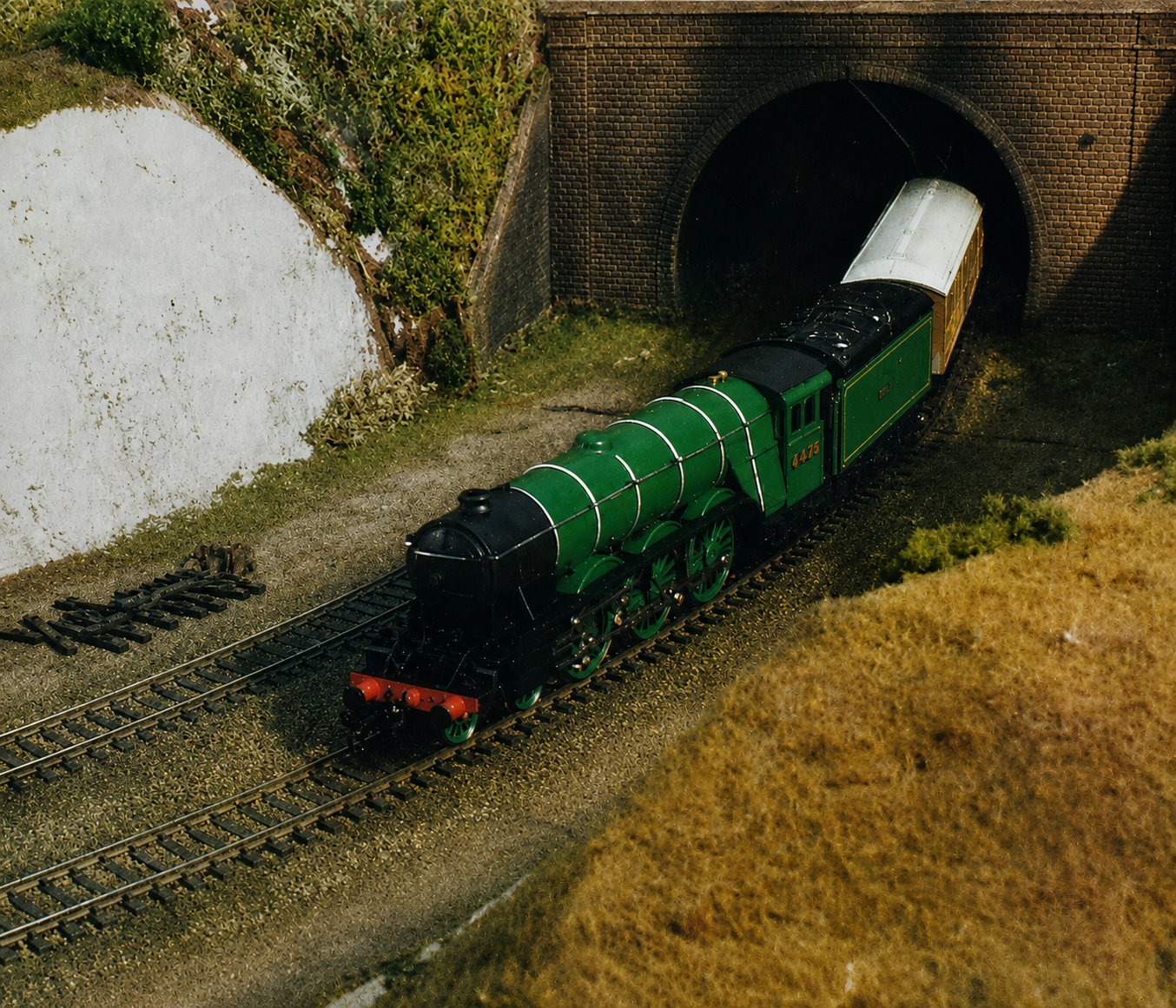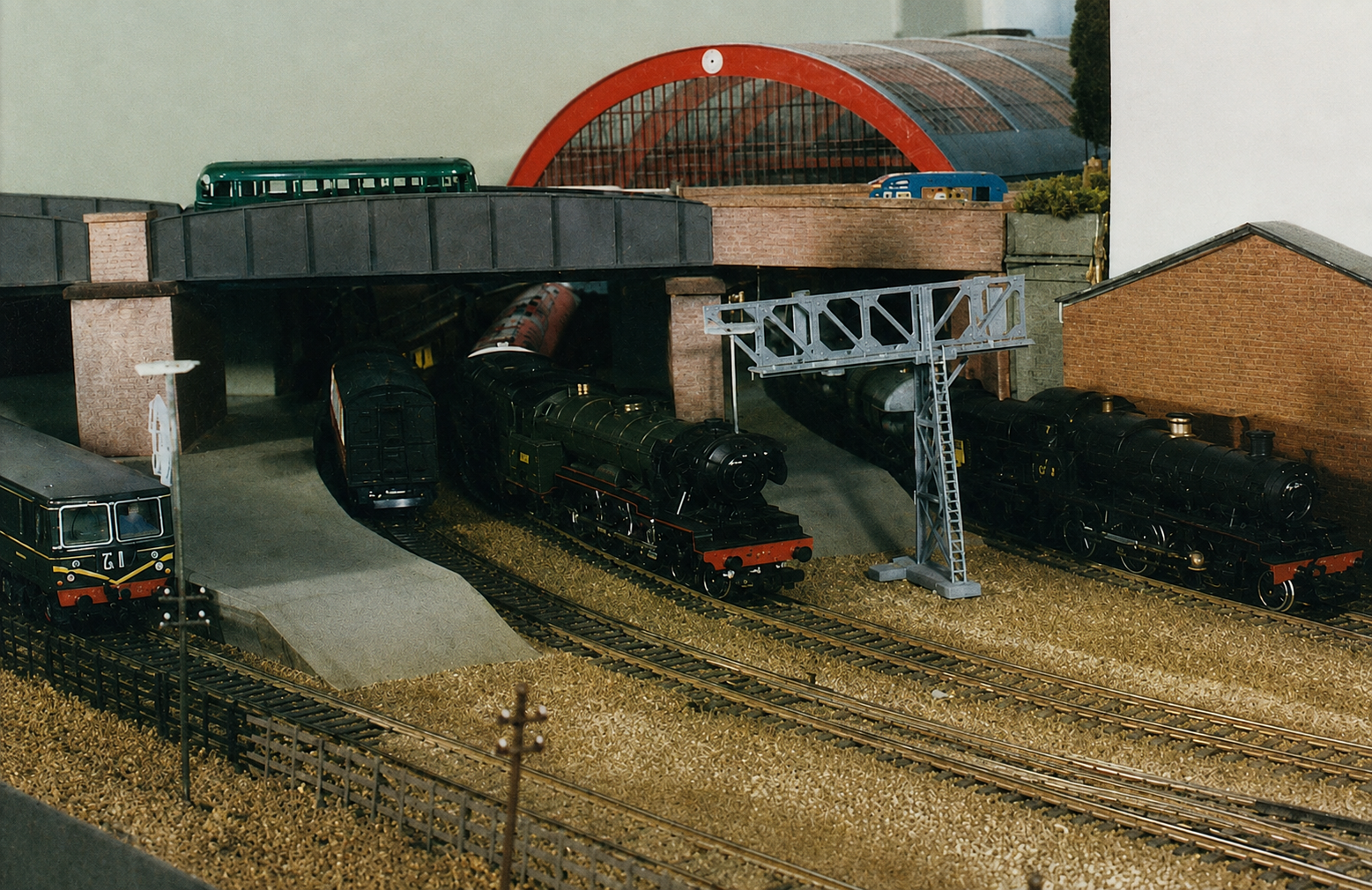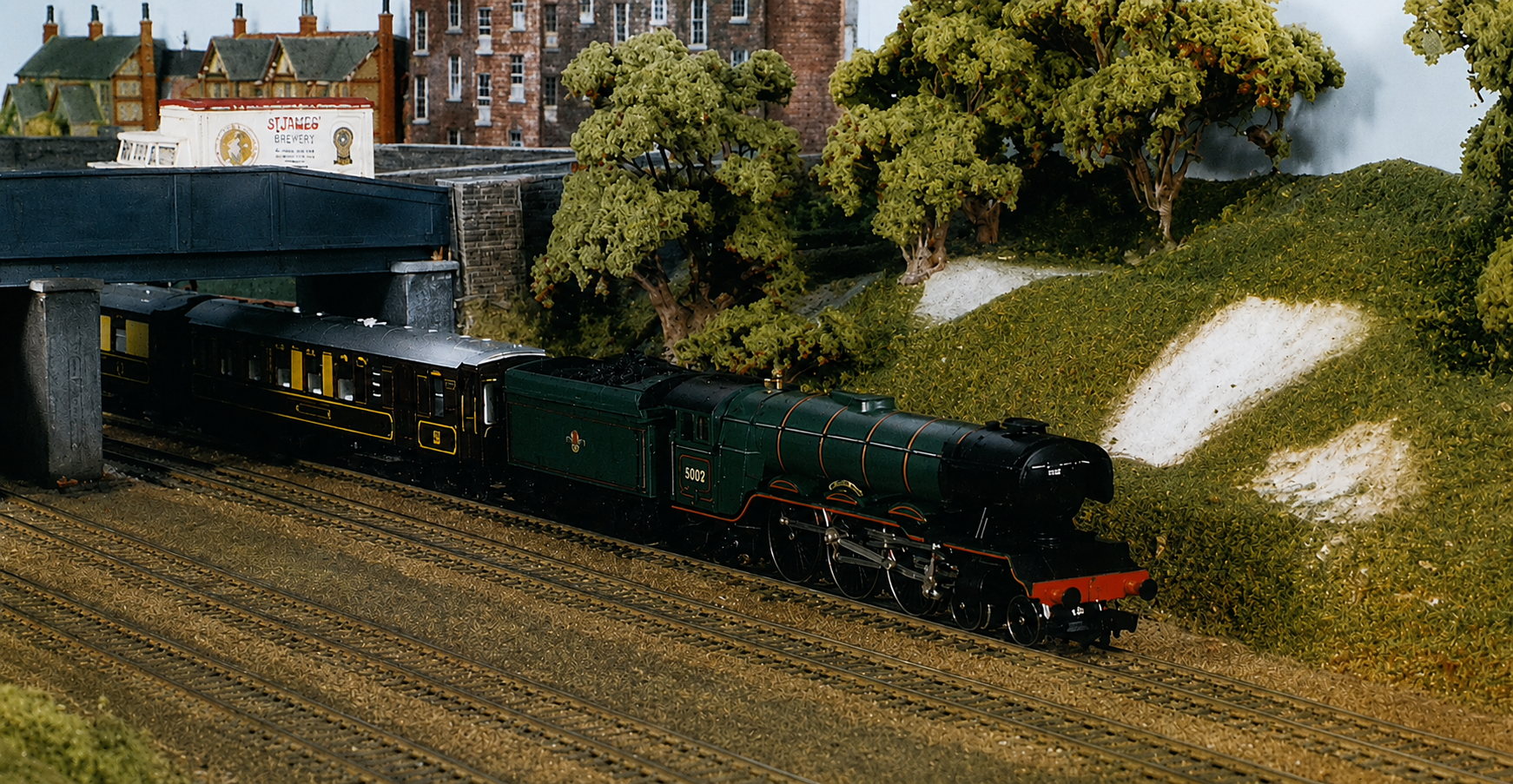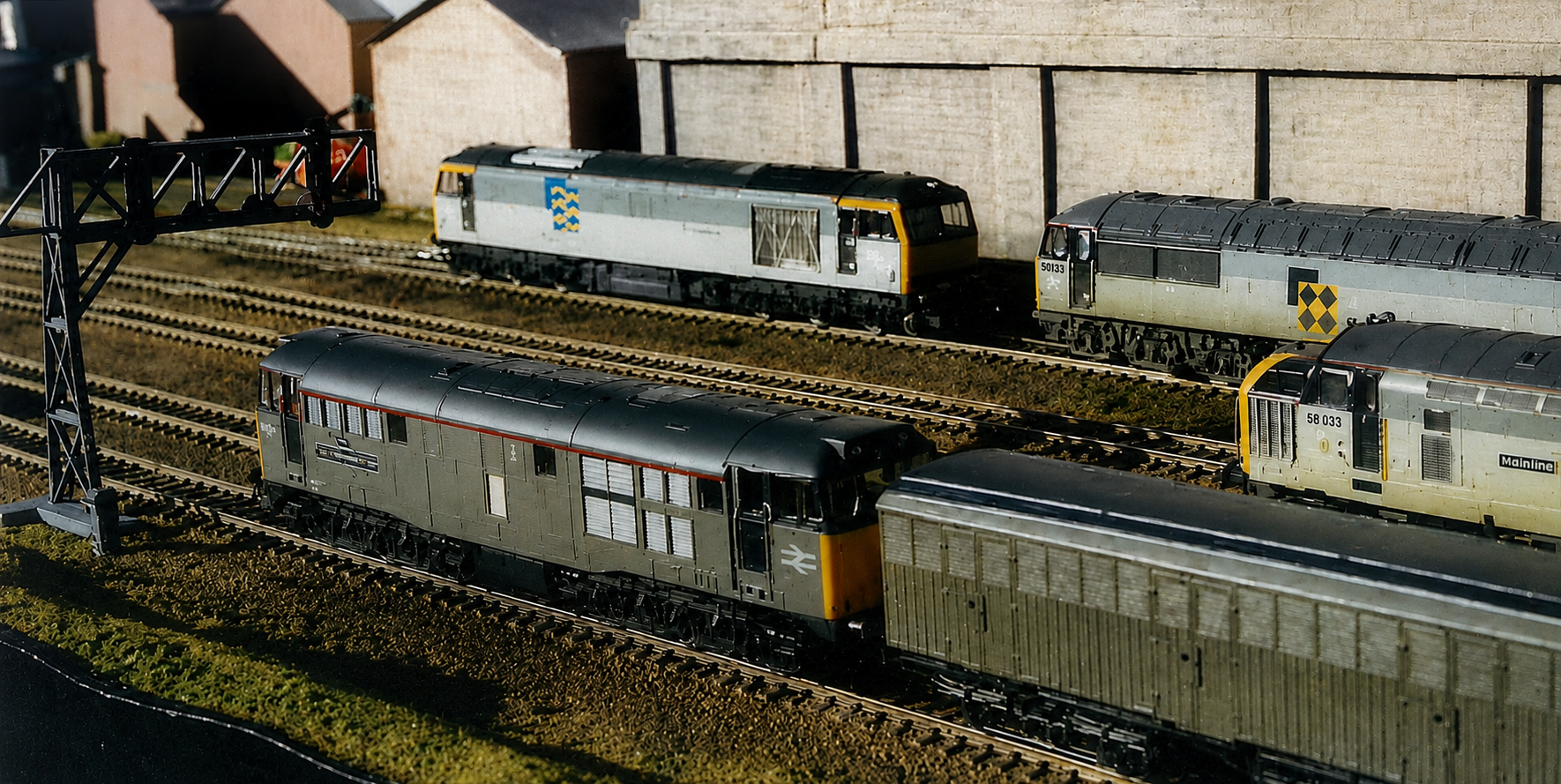

Ashdean was the Society’s first major OO gauge exhibition layout, depicting a British railway primarily during the 1960s. It was designed for continuous running, with separate up and down lines, a sizeable station and a fiddle yard capable of holding a varied sequence of trains.
The layout
The main station formed the centrepiece of Ashdean, with curved platforms disappearing beneath a train shed roof into the fiddle yard. A loop and bay platform allowed stopping and local services to be worked without blocking the main lines.
Road bridges helped divide the visible section into separate scenes, while a small cement works and locomotive stabling point added further interest. The scenery used low-relief buildings, trees and other relatively simple scenic features to create a convincing British setting.
Operation
Ashdean was built with exhibition running in mind. Most trains operated continuously through the station, while local passenger services and workings associated with the cement works provided some stopping and shunting movements.
The fiddle yard contained eight loops, several long enough to hold two trains, together with locomotive stabling sidings. A typical operating sequence could include around 13 complete train formations, ranging from express and local passenger services to parcels, engineering and freight trains.
Electrical system
The layout used electro-frog points and common-return wiring, with individual track sections isolated to provide operating flexibility. Point motors were operated through capacitor-discharge units, while hand-held feedback controllers were used for train control.
The electrical connections between baseboards were carefully numbered and documented, with colour-coded wiring used throughout. Provision was also made for possible future overhead electrification.
Exhibition history
Ashdean made its public debut at the New Zealand Model Railway Convention at Masterton and subsequently appeared at a number of exhibitions. It was also displayed for a period at Upper Hutt, where the Society had space within a model, toy and car museum.
By the time it featured in Railway Modeller in March 1995, Ashdean had largely retired from exhibition use but continued to be used by members at club meetings.
Photo gallery